
Starting a business with no money sounds like a slogan, not a plan. It is a plan, though — just a different one from the usual advice. No inventory, no rented space, no ads. You start by selling a skill you already have, getting paid before you spend anything, and letting early revenue fund every upgrade. This guide shows how to start a small business with no money in 2026 — the $0 structure, the no-cash businesses, the free tools, the later costs, and a 30-day plan to your first paying client.
Can You Really Start a Business With No Money?
Yes — with one honest condition. You can start a business with no money only if it sells your time, skill, or knowledge. A service business needs nothing but a phone and internet: freelance writing, virtual assistance, tutoring, pet sitting, bookkeeping, social media help. A product business is different: inventory, packaging, and shipping cost cash before the first sale. With $0, a product idea usually means print-on-demand or dropshipping, where someone else holds the stock and takes a cut. The question is which kind fits a $0 start.
| Business type | $0 start? | What it takes |
|---|---|---|
| Service business | Yes | A skill, a phone, internet |
| Digital products | Yes | Free tools; platform fees later |
| Print on demand | Yes | A design; platform prints per order |
| Dropshipping | Yes | A storefront; supplier ships per order |
| Inventory business | No | Stock, packaging, shipping upfront |
What ‘No Money’ Really Means
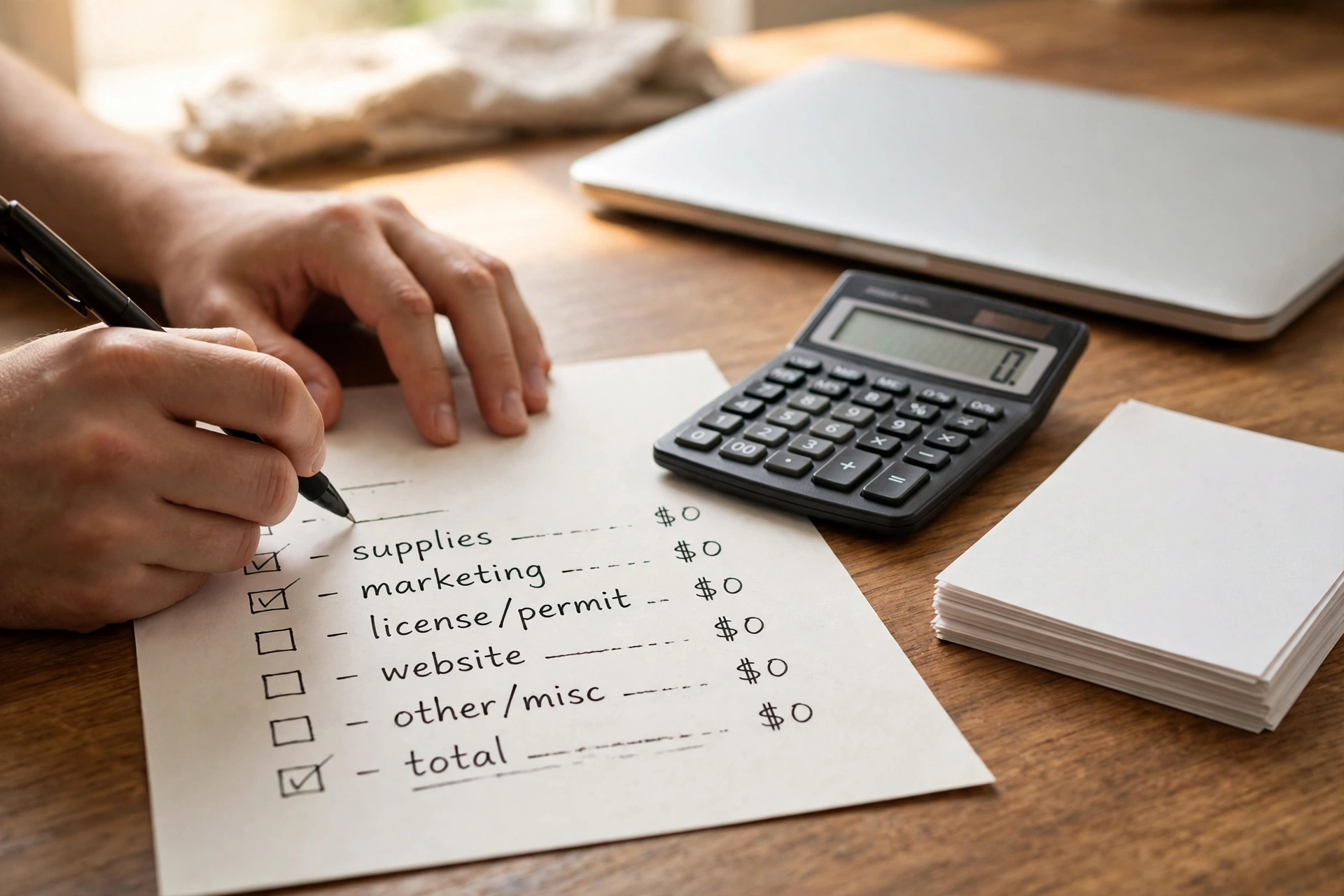
Starting a business with no money means no cash outlay, not no investment. The investment is your time: 8 to 12 hours a week at the start, usually around a job you keep. You already own the essentials — a phone or computer, an email address, people who know what you are good at. You have no budget for mistakes, so test before you build: talk to real buyers, get one person to pay, then spend. Starting a business without money is slower than starting with capital — every step is paid for in hours instead of dollars.
Why a Sole Proprietorship Is the $0 Structure
When you start a business with no money, the legal structure decides your first bill. A sole proprietorship costs $0 to form — no filing, no fee, no paperwork. You simply start selling under your own name. An LLC costs $35 to $500 to file depending on the state, plus an annual fee in many states. Here is what an LLC actually costs to form. That $0 formation is why most $0 starts are sole proprietorships at first.
Two things are still worth doing, and both are cheap or free. An EIN — your federal tax ID — is free from the IRS and takes about 15 minutes online; it lets you open a business bank account without handing out your Social Security number. A DBA (“doing business as”) costs $10 to $100 in most states if you want a business name. A general business license runs $50 to $150 a year in many cities, but many service businesses need none — check your city first.
Taxes work like any sole proprietor’s: income on Schedule C, self-employment tax of 15.3% on net earnings over $400, and roughly a quarter of each payment set aside. Owe more than $1,000 a year and the IRS wants quarterly estimated payments — April 15, June 15, September 15, January 15. Here is how sole proprietorship taxes work in full, including the deductions that cut the bill. The habit: move 25% of every payment into a separate savings account the day it arrives.
7 Businesses You Can Start With No Money
Pick one that matches a skill you already have. The best $0 business is the one you can deliver this week.
| Business | What you sell | What you need | Where first clients come from |
|---|---|---|---|
| Freelance writing or editing | Articles, newsletters, resumes | Free word processor | Local businesses, your network |
| Virtual assistant | Email, scheduling, admin | Laptop, free email | Small business owners |
| Online tutoring | A subject or test prep | Free video-call app | Parents, school groups |
| Pet sitting or dog walking | Visits and walks | Your time, a phone | Neighbors, local groups |
| Social media management | Posting schedules, captions | Free Canva plan | Restaurants, small shops |
| Bookkeeping | Monthly records | Spreadsheets | Self-employed people |
| Digital products | Templates, guides, printables | Canva, Google Docs | Etsy, Gumroad, social posts |
Two notes. Print-on-demand and dropshipping are the only product models that fit a $0 start, and both pay you last — the platform takes its cut first — so treat them as a second business. And the fastest first dollar comes from a service sold to someone you already know.
The $0 Launch Plan in 6 Steps
1. Pick the skill you can sell this week. Write down three things people already ask you for help with. The one you can deliver by Friday is your business.
2. Talk to 10 people before you build anything. Message or call 10 people who might need the skill: former coworkers, local shop owners, parents, people in a Facebook group you belong to. Ask about their problems, not your idea. If three describe the same problem, you have a market.
3. Write a one-page plan. Five lines: what you sell, who pays for it, what you charge, how you find them, and what “working” looks like in 30 days. A plan this short forces the only decisions that matter early.
4. Set up with free tools only. A Gmail address, a one-page site or a business profile where your customers spend time, and a free Canva account. Do not buy a domain, a logo, or a premium plan yet.
5. Get your first 3 paying clients. Offer a small, fixed-price first job at a starter rate in exchange for a testimonial. Your first three clients are your marketing: their reviews and referrals beat any ad.
6. Reinvest the first $100. Spend it in this order: the DBA if you want a business name, a domain name for your own site, then a tool that saves you time. Nothing goes to ads or courses until the business is earning steadily.
What Actually Costs Money (and When)
No honest guide to starting a business with no money hides the costs that show up later. The difference is timing: you pay them from revenue, not from savings.
| Item | Cost | When you pay |
|---|---|---|
| DBA registration | $10–$100 | When you want a business name |
| General business license | $50–$150 a year | If your city requires one |
| Domain name | $10–$15 a year | When you want your own website |
| Website hosting | $0–$60 a year | Free tiers first; pay from revenue |
| Paid tools | $0 to start | Upgrade only from revenue |
| LLC formation | $35–$500 | When you want liability protection |
| Total, lean first year | $0–$150 | — |
That last row is the honest number: a lean first year costs $0 to $150, and most of it is optional. Here is a full startup budget for a one-person business with every line item.
The Free Toolkit
| Need | Free tool | Free-tier limit |
|---|---|---|
| Gmail | 15 GB storage | |
| Documents | Google Docs and Sheets | Free |
| Design | Canva | Generous free tier |
| Website | WordPress.com, Google Sites, Carrd | 1–3 free sites |
| Video calls | Zoom, Google Meet | 40–60 min meetings |
| Accounting | Wave | Free invoicing and records |
| Email marketing | MailerLite | 1,000 subscribers |
Use free tiers until revenue justifies an upgrade.
Your First 30 Days
Week 1: Choose and listen. Pick the skill, list 20 people who might need it, and talk to 10. Note the exact words they use for their problem — those words become your offer.
Week 2: Set up and price. Write the one-page plan, set up the free email and profile, and fix a price — hourly or a flat fee for a small job. Post once about what you do, in plain language, where your customers spend time.
Week 3: Outreach and first sale. Message the other 10 on your list, follow up with the 10 you already spoke to, and end each conversation with a yes, a no, or an introduction. Goal: one paying client by week’s end.
Week 4: Deliver, ask, reinvest. Do the work well, ask for a short testimonial, and put the first $100 to work in the order above. Then set next month’s goal: three clients, or one client paying twice as much.
5 Mistakes That Kill a $0 Start
1. Building before selling. A logo, a website, and a business card feel like progress. They are not. Until someone pays, you have a hobby with stationery.
2. Underpricing. New founders often charge too little, thinking it will win clients faster. It backfires: people read a very low price as low quality. Research what others charge, then price at the low end of normal — not below it.
3. Ignoring taxes. The money in your account is not all yours. Self-employment tax is 15.3%, and the IRS expects quarterly payments once you owe more than $1,000 a year. Move 25% of every payment aside on arrival.
4. Buying courses and ads before revenue. A $200 course or a $50 ad test is not a $0 start. Free learning — SCORE mentors, SBA guides — covers the first month. Spend only what the business has already earned.
5. Quitting your job too early. Keep the paycheck while you build. Do not quit until you have six months of living expenses saved and the business has earned at least 75% of your salary for three straight months.
FAQ
Can you really start a business with no money?
Yes, if the business sells a skill, service, or knowledge you already have. Service businesses need no cash upfront — just time and a phone. Product businesses with inventory do not fit a $0 start; print-on-demand and dropshipping are the exceptions.
What is the cheapest business to start with no money?
The cheapest is a service you can deliver today with tools you already own: freelance writing, virtual assistance, tutoring, pet sitting, or bookkeeping. All cost $0 to begin, and the first client usually comes from people you know.
Do I need an LLC to start a business with no money?
No. A sole proprietorship costs $0 to form and is the usual structure for a $0 start. Form an LLC later, when revenue or liability risk justifies the $35–$500 filing fee.
How much money do you need to start a small business?
For a lean service business, $0 to $150 in the first year: a DBA, a domain, a license if your city requires one. The bigger number is time — 8 to 12 hours a week for the first month.
How long until a no-money business makes money?
A service business sold to people you know can land its first paying client in 2 to 4 weeks. Replacing a full-time income takes months, and depends on your hours and how fast you raise your rates. Anyone promising a full income in the first month is selling a course, not a business.
This article is general information, not legal or tax advice. Rules, fees, and tax thresholds vary by state and city — confirm current figures with your Secretary of State’s office and a tax professional before you act.